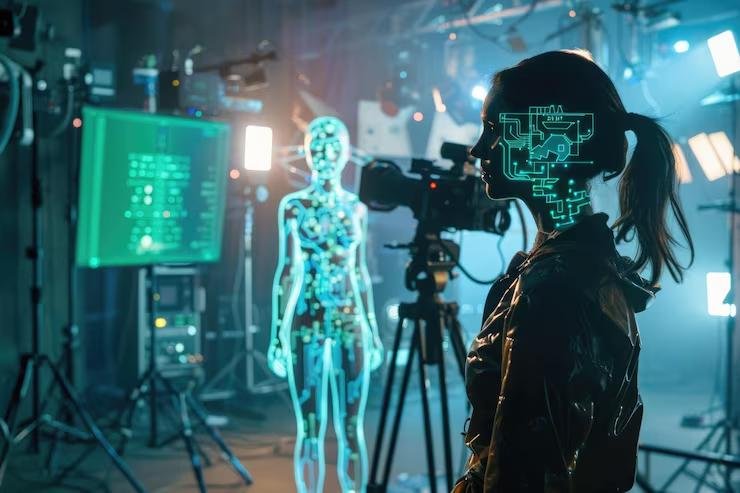
How AI and Virtual Production Are Transforming Filmmaking

Artificial intelligence and virtual production are reshaping filmmaking more rapidly than any previous technological shift. From smarter pre-visualisation and real-time environments to efficient post-production and cost-effective workflows, these innovations are redefining how stories are created and presented. The future of cinema will belong to creators who embrace digital transformation and intelligent automation.
Cinema has continuously evolved through technology—sound, colour, CGI, and 3D, each redefining storytelling. Today, the most significant transformation is driven by artificial intelligence (AI) and virtual production. These advancements are revolutionising how filmmakers plan, shoot, edit, and distribute content, reshaping every stage of the creative pipeline and enabling new possibilities previously considered impossible.
AI and virtual production are not replacing human creativity. Instead, they are expanding the director’s toolkit, allowing storytellers to visualise worlds instantly, reduce production time, and deliver truly immersive experiences. As the entertainment industry pushes the boundaries of visual storytelling, these technologies are shaping the next generation of filmmaking.
AI in Pre-Production: Smarter Planning and Faster Decisions
Artificial intelligence is increasingly crucial in the earliest stages of film development. AI-powered tools streamline tasks that traditionally consumed weeks, helping teams make quicker, more informed decisions.
Key capabilities include:
- Automated script analysis for identifying characters, location shifts, and resource needs.
- Budget and scheduling optimisation to balance time, staffing, and logistics.
- Predictive insights into production demands and creative planning.
- Enhanced visualisation tools that generate storyboards and concept previews within minutes.
By accelerating high-effort planning work, AI frees directors and producers to focus on storytelling rather than repetitive administrative tasks.
Virtual Production and Real-Time Environments
Virtual production blends physical sets with real-time digital environments displayed through LED video walls and advanced rendering engines. Instead of relying on green screens and heavy post-production compositing, filmmakers can create scenes in real time, with interactive lighting and camera tracking that mimic real-world physics.
Advantages of virtual production:
- Real-time control over lighting, weather, and location changes.
- Reduced travel and set-building costs.
- Immediate feedback during shooting improves collaboration.
- Minimised need for reshoots, saving time and resources.
This approach transforms the filmmaking process from a static linear pipeline into a dynamic, flexible environment where creativity can evolve instantly.
AI-Driven Visual Effects and Post-Production
AI is becoming an essential element in visual effects, editing, sound design, and finishing. Tasks that typically require extensive manual labor can now be completed more efficiently, preserving artistic quality while dramatically reducing turnaround.
Transformative capabilities include:
- Automated rotoscoping and object removal.
- Upscaling and restoration for archival footage.
- AI-powered editing tools that detect scenes, sync audio, and generate rough cuts.
- Intelligent colour matching and grading across multiple shots.
Machine-learning algorithms enhance accuracy and precision, enabling teams to focus on refining creativity instead of managing time-consuming manual steps.
Enhancing Realism and Immersion in Storytelling
Virtual production and AI combine to create environments that feel lifelike and emotionally engaging. Real-time rendering allows filmmakers to simulate complex, high-budget scenes at a fraction of traditional cost, opening creative opportunities for both large studios and independent creators.
Benefits for audiences and creators:
- More visually immersive experiences.
- Unlimited set possibilities without geographical limitations.
- Faster iteration and creative experimentation.
- Consistent artistic vision from script to screen.
By enabling immediate visual collaboration, directors, cinematographers, and designers remain aligned throughout the production journey.
Actionable Tips for Filmmakers Adopting AI and Virtual Production
Steps to get started effectively
- Begin with hybrid workflows rather than a complete conversion to virtual production. Experiment with small segments to learn tools effectively.
- Invest in real-time rendering skills, as engines like Unreal and Unity are becoming essential creative platforms.
- Use AI for time-intensive tasks, such as early storyboards, previs models, and scheduling, to simplify operations.
- Build collaborative technical teams that combine creative and engineering expertise.
- Stay informed about emerging tools, as capabilities evolve rapidly.
The Future of AI-Powered Filmmaking
AI and virtual production will continue driving innovation across the filmmaking ecosystem. As tools become more accessible, production timelines will shorten, visual quality will rise, and storytelling will evolve beyond physical limitations. Intelligent automation will enable filmmakers to experiment freely, push boundaries, and compete globally regardless of budget scale.
The result is an industry where imagination becomes the primary resource—not location, equipment, or logistics.
Conclusion
AI and virtual production are accelerating a new era of filmmaking defined by efficiency, creativity, and visual immersion. By transforming pre-production, shooting, and post-production processes, these technologies empower filmmakers to achieve stronger results with fewer constraints. The future of cinema belongs to those who combine artistic vision with innovative digital tools, shaping stories that resonate powerfully with modern audiences.
Westminster Identity

Leave Your Comment